
Welcome to the fifth post from Care Not Control: Repression & Youth Resistance. In this resource, we discuss surveillance culture in America and paternalistic attitudes towards young people’s privacy. These attitudes exclude youth from their own lives and often use false claims of protection to justify limiting young folks’ bodily autonomy.
Young people deserve privacy. They should be able to make decisions about their own bodies.
Surveillance: A Policing Tool
Did you know: In a study looking at self-managed abortion criminalization, folks were most often reported to police by people they entrusted, like healthcare providers or acquaintances.
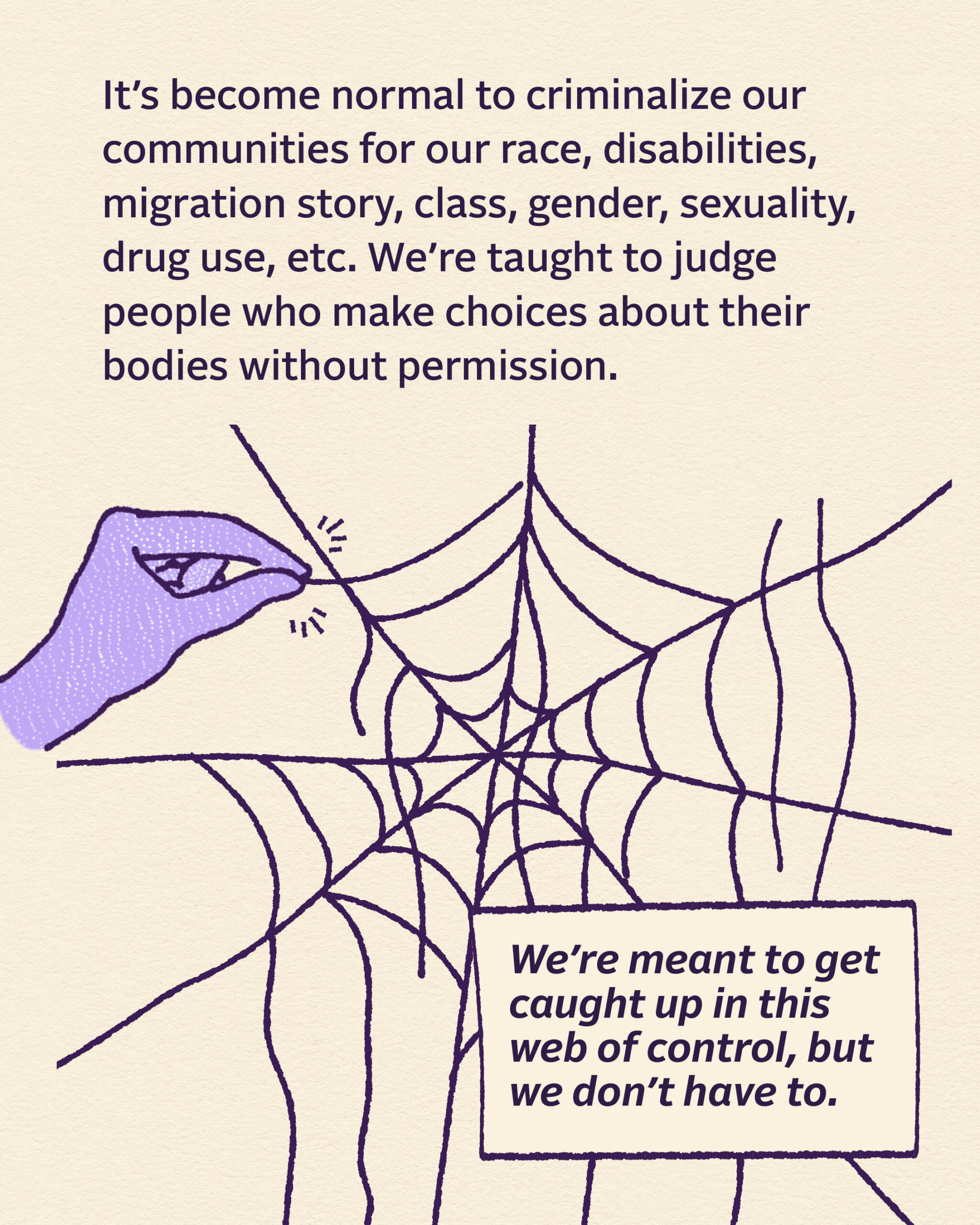
We are socialized to believe that laws, police, courts, child protective services, juvenile detention centers, and prisons protect us. But this same criminal legal system is often used to punish and instill fear in our communities—forcing us into restrictive gender and social rules. Today, surveillance systems are used to track youth. This isn’t meant to keep them safe. It is meant to mark them as the next target.
The U.S. government has a long history of using surveillance to abuse and oppress the general public. Their surveillance tactics target the most vulnerable through both legal and often illegal, secretive means. Telegraphs were wiretapped throughout the Civil War. COINTELPRO was used to “neutralize” Black revolutionaries. Countering Violent Extremism (CVE) infiltrates Muslim communities under the guise of counterterrorism. Alliances between government, police, personal technology, and AI track our every move, from homes to schools to social media.
This tracking is meant to incite fear, reduce dissent, and create a social order rooted in hierarchy that decides a person’s humanity. Since the Dobbs decision, monitoring pregnant people’s data has increased, and personal digital data is used more often to criminalize those seeking abortions in civil and criminal cases.
- In 2022, Facebook messages were used in a case investigating a mother who was accused of helping her daughter illegally obtain an abortion.
- In 2023, photos of group thread chats were used in a Texas lawsuit by a man who sued his ex-wife’s friends for allegedly supporting her in seeking an abortion.
- Abortion funds and providers find themselves constantly fighting against new laws criminalizing them and those who support people in bodily autonomy.
Since Roe v. Wade was overturned, research shows that loved ones, acquaintances, or medical or social services providers are the most likely people to report others for their abortions. These are the main people that young people turn to for healthcare support. Because structural punishment is tightly tied to cultural and societal stigma, this means young folks are very vulnerable. They are often silenced. They are told to be “seen, not heard.” They are shamed for who they are and punished when they push back. They aren’t always able to protect themselves and their private health information from unsupportive parents and school administrators. Pregnant, transgender, and gender expansive young people risk being isolated from their community and support networks, with no access to resources for the care they need.
Online Privacy Tips for Youth
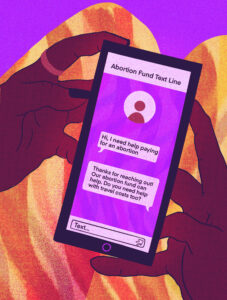
These digital privacy tips can help young people seeking abortions stay safe and keep their mobile data secure. Keep your abortion search private from parents, caretakers, big tech, the government, or anyone else.
Surveillance is Control, Not Safety
We have a few million-dollar questions for the billion-dollar surveillance industry: Why are young people treated like criminals, more and more? Why are they being watched? And why are they fed propaganda?
We think it’s about control and repression, not safety. Restrictions on and surveillance of youth are often framed as protection. But research shows that treating young people like criminals hurts their growth and chances in life. Monitoring youth’s activity prevents them from sharing important thoughts and feelings. It also paves a clear path for the school-to-prison pipeline, where criminalization and punishment are prioritized over access to education and life-affirming resources. This criminalization is now spreading outside of school and homes to broader immigration and incarceration.
- In Idaho, “abortion trafficker” laws target anyone who helps minors travel out of state for legal abortions.
- In Texas, ICE has been shepherding detained pregnant young people into medically risky facilities, presumably to restrict their access to any abortion.
- In Congress, “child safety” is being used as a reason to turn personal devices into digital ID cards that can be used by the government and other unethical actors.
Young people are controlled to enforce strict “moral” rules on them, which are supported by the strong systems of oppression in our society. When youth unite to push back, surveillance technology is used to police youth resistance and collect information on organizers. Student data, CCTV monitoring, facial recognition technology, and physical force have all been used to stop young protestors.
Youth Repression & Youth Resistance
Where there’s repression, there’s resistance. Young people continue to resist, as they always have, by organizing, taking care of each other, and fighting to be themselves despite systems that seek to disempower them.
Youth organizers at Encode Justice are urging their legislators to regulate AI surveillance in schools. Young people across the country are organizing with the Youth Abortion Support Collective to bust abortion stigma, share information and resources on how to get an abortion, and connect other folks to abortion access. URGE chapters organize on college campuses across the country for Reproductive Justice. Youth abortion storytellers with Youth Testify tell their stories boldly and build power with other youth. And Forward Together builds power with BIPOC trans youth to create alternatives grounded in queer and trans liberation.
Let’s Build Safety with Youth
We keep us safe! Across the country, young folks are taking their safety and autonomy into their own hands. Here are four things you can do, whether you’re a young person or an ally:
Be Safe: Skill up in community safety and digital security practices to show up for each other in unsafe times. Continue to maintain good digital security practices in your daily life!
Get Training: Learn about de-escalation and practical ways to show up for each other in unsafe times through organizations like Vision Change Win. Know your rights with state-based resources from the ACLU.
Create Together: Coordinate in-person activities that won’t be surveilled with your trusted friends and comrades. Support youth gatherings with trusted friends for autonomous activities! Think: in-person zine and craft fairs, skate days, open mics, food drives, fundraisers, anti-AI art-making parties & your local abortion fund’s community events. Occupy public space and embody your joy—a human right that must always include young folks!
Develop Community: Donate, volunteer, and connect with your local abortion fund to help ensure all people get the care they need. Get involved in a local event near you today.
Meet us in your inbox—or on the Care Not Control page! Strengthen youth bodily autonomy with us.