
In our third post from Power in Our Hands: Care over Punishment, we discuss the criminalization of managing our own abortions. Everyone deserves to have their decisions about their bodies supported with access to collective care, resources, and community. So, it’s vital to understand how self-managed abortion exists within a web of criminalization based on anti-Blackness and white supremacy.
Learn more and get the resources you need to build safety in your community.
Compassion, Not Punishment.
The current institutions of criminalization were built on a foundation of violence.
This includes a 500-year period of slavery, genocide of Indigenous people, settler colonialism, and imperialism. Within these violent conditions, policing and punishment systems were designed to consolidate power. Those in power used and continue to use methods such as land takeovers, cultural erasure, genocide, intense surveillance, profiling, policing, torture, and death to control marginalized people.
Control and criminalization were cemented as the cornerstones of the American punishment system.
We are socialized to believe that laws, police, and the entire criminal justice system will protect us. But their ongoing function is to protect the current order of capitalism, (trans)misogyny, and white supremacy.
Expand your knowledge today. Read Power in Our Hearts, the Power in Our Hands zine. Or watch our recent Movement Panel on Self-Managed Abortion (SMA):
Read Power in Our Hearts
Prepare to talk about criminalization and build safety in your community with NNAF’s new zine about self-managed abortion. Available in English and Spanish!
Power in Our Hearts: A ZineWatch Our SMA Panel
On 11/18/25, reproductive health, rights, and justice leaders discussed self-managed abortion (SMA), criminalization of reproductive autonomy, and how communities are organizing in response.
Watch the videoPrefer to listen? Check out this audio recording of the 11/18/25 Movement Panel.
Our Lived Experiences Tell the Truth.
The Hyde Amendment was passed in 1976–only three years after Roe v. Wade.
Since then, this unjust ban on federal public funding for abortion has had devastating impacts on Black, Indigenous, and people of color seeking abortion care. For decades, we’ve resisted anti-abortion extremists chipping away at abortion access, instead of addressing root causes.
By defining what is “illegal,” the state decides who is viewed as a criminal and who can be punished. It determines whose bodies have value and whose are disposable.
What Do We Do When State-Sanctioned Terror is “Legal”?
Every day, we see and feel the harm of state-sanctioned terror.
- Families and individuals are being detained and disappeared.
- Cuts to social services for basic needs are hurting families’ abilities to survive.
- Private and public healthcare costs are rising and are often ableist, racist, and transphobic.
- Healthcare requires employment status, citizenship status, and more.
- We see the expansion of control over bodies with restrictions on access to gender-affirming care.
- People are targeted for distributing food and facing consequences for participating in strikes or other public acts of resistance.
In the face of this structural violence, mutual aid networks keep showing up.
As a result, the state has aggressively criminalized community care. Abortion funds and clinics find themselves in constant lawsuits, fighting against new laws criminalizing them and those who support people in getting abortions. Across states, legislators are considering extreme bans on abortion, including ones that would criminalize anyone—even friends or family—for helping abortion seekers get information or travel out of state. State officials are introducing laws that would ban abortion pills on the state level and laws to punish doctors with decades in prison.
Did you know:
Abortion criminalization is the surveillance of our bodies, relationships, autonomy, and mutual aid.
There were at least 210 pregnancy-related prosecutions in the first year after Dobbs. That’s the highest number of pregnancy-related prosecutions documented in a single year.
In most of these cases, the person most likely to alert law enforcement was a loved one, an acquaintance, or a medical or social services provider.

We Got Us. No Matter Where.
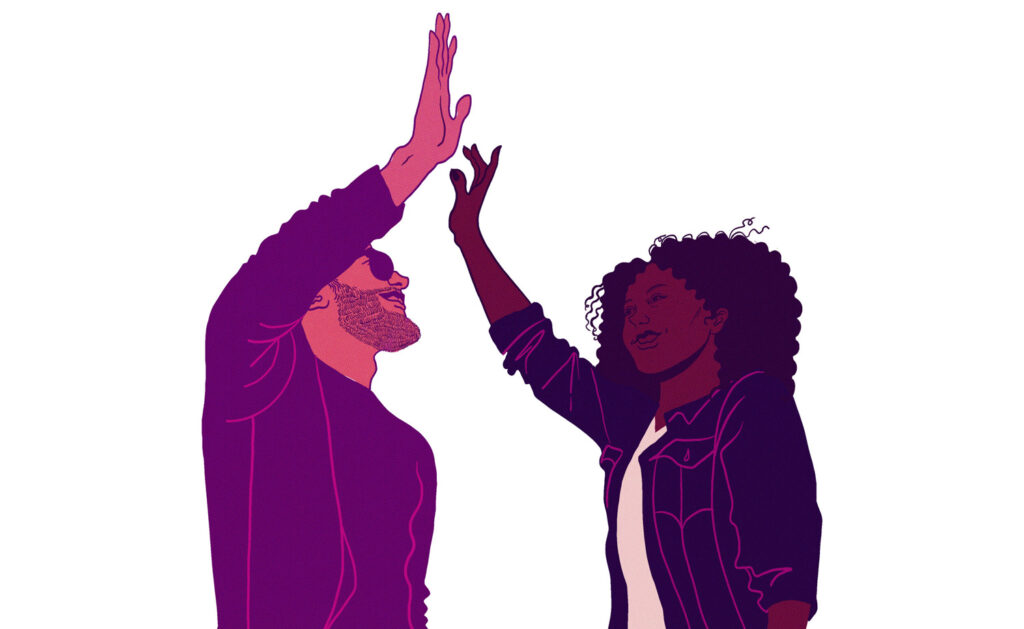
Because punishment is part of our culture, we are conditioned to carry out behaviors that uphold these systems. Neighbors and families often police those around them. It’s become normal to criminalize our communities for our race, disabilities, migration, story, class, gender, sexuality, drug use, and more. We must work together to keep each other safe and prioritize care over punishment.
Community Action: Let’s root ourselves in community connections and expand our definitions of community care. Use this new printable zine, Power in Our Hearts, to talk with trusted people and community members about self-managed abortion, criminalization, and building community safety.
Personal Action: Reflect on your identity and experiences. How are you a part of or impacted by structures of oppression? How are you positioned to use privilege? How are you positioned to build collective power with others? Actively resist participating in behaviors that feed the criminal punishment system. Find other ways to be in community that are based in care and respond to the root causes of oppression.
Change starts at home. It starts with yourself. It starts with those you trust and love. Join abortion funds to co-create a future where all people have the power and resources to care for and affirm their bodies, identities, and health for themselves and their families.
Meet us in your inbox—or on the Power in Our Hands page! Keep learning with us.